
Tactical Urbanism Meets Tradition

Introduction
Tactical urbanism—low-cost, temporary changes to the built environment—has become a powerful tool for community engagement. When paired with traditional games and cultural practices, it becomes a celebration of both place and identity.
Small Interventions, Big Cultural Impact
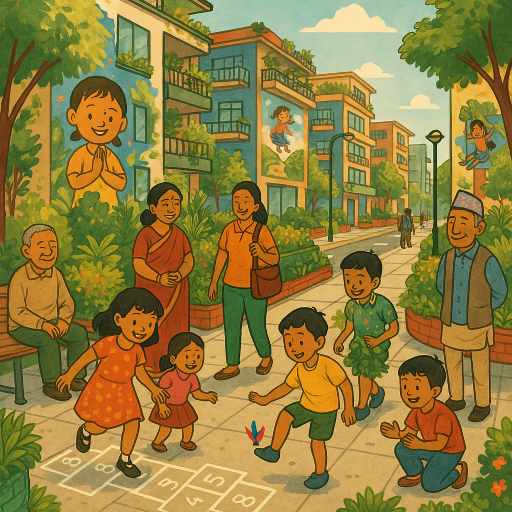
- What is Tactical Urbanism?: Think pop-up parks, painted crosswalks, or temporary play zones. These interventions are fast, flexible, and community-driven.
- Let’s Play Examples: From chalk-drawn games in Patan to musical corners in Bhaktapur, Let’s Play uses tactical urbanism to bring culture and play into everyday spaces.
- Cultural Sustainability: These interventions don’t just beautify—they preserve intangible heritage by making it visible and participatory.
- Scalability: These ideas can be replicated in neighborhoods across Nepal, using local materials, traditions, and community knowledge.
conclusion
Tactical urbanism isn’t just about urban design—it’s about cultural storytelling. By combining tradition with innovation, we can build cities that are playful, proud, and sustainable.

Written by PlayGuru
More From This Category
Reclaiming Streets for Play
In cities dominated by cars and concrete, reclaiming streets for people—especially children—can be a radical act of sustainability.
Reclaiming Streets for Play
In cities dominated by cars and concrete, reclaiming streets for people—especially children—can be a radical act of sustainability.
Reclaiming Streets for Play
In cities dominated by cars and concrete, reclaiming streets for people—especially children—can be a radical act of sustainability.
 English
  नेपाली
0 Comments